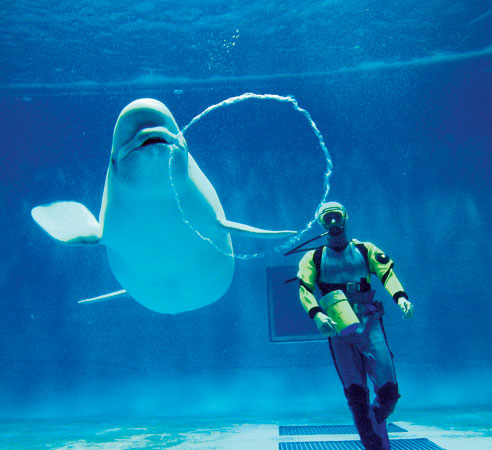
I didn’t post today, Scott. Guess which mammal I am.
Working on it tomorrow, hopefully.
I didn’t post today, Scott. Guess which mammal I am.
Working on it tomorrow, hopefully.

Though this is not a deeply thought out post, I’m trying to preside over a polygamous marriage between quotes by R. Buckminister Fuller, Viktor Frankl, and the idea of pattern languages, to create a new way of expressing the idea of a Declaration of Interdependence.
— R. Buckminister Fuller: “A designer is an emerging synthesis of artist, inventor, mechanic, objective economist, and evolutionary strategist.”
— Wikipedia: A pattern language is a “method of describing good design practices within a field of expertise that ordinary people can use to successfully solve very large, complex design problems.”
— Viktor E. Frankl: “Man’s search for meaning is a primary force in his life and is unique and specific in that it must and can be fulfilled by him alone.”
— Declaration of Interdependence: A crowd designed pattern language that ordinary people can use to successfully connect the meaning in their lives to the massive, complex world of humanity around them.
Though I know a marriage of this sort is very likely illegal under the laws of the truly profound and puffy thinkers, there is some overlap there that I hope to tease out in the near future.

There are times in our lives when we forage and hunt for confirmations that will feed us until we finally reach future epiphanies. For several years it seemed those confirmations were being wheeled to my front door — one after another — in a series of supremely well written books. Each of them sustained me for months at a time in ways that are difficult to describe. There is little doubt that you’ve experienced something very similar whether it was a book, movie, painting, song, or any number of works created by other humans.
I believe no single person’s idea is solely their own because we all stand on the shoulders of giants. These were my specific giants for a number of years.
My next several posts will outline each of these great works and attempt to explain why they are so monumental and how they changed my thinking.
There was a great article by Justin Housman on surfermag.com today, if you happened to miss it.

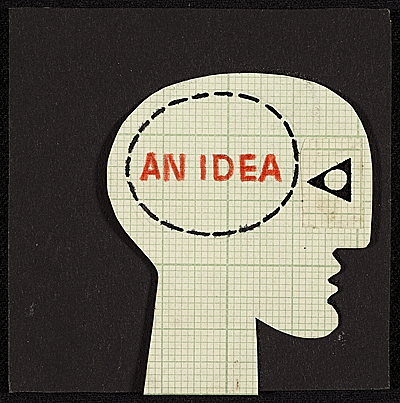
Life improves for humanity over time not because of some immutable law, but because individuals , communities, and nations take it upon themselves to not only imagine a future worth creating but actually build it. Creating a vision of the future that inspires the world with a sense of purpose, and not just power, will be a game changer.
This is the start of an experiment. An experiment in a collaborative effort to create a global “Declaration of Interdependence.” It will be crowd-designed with the goal of expressing the spirit of the human mind, the world we wish to live in, and our rights and responsibilities.
The below 24 topics are simply an invitation to conversation. No doubt they will change. Please kick this effort off by writing — or showing what one (or more) of these topics means to you. Brevity is key. If you couldn’t explain it to your grandma in 30 seconds, it ain’t short enough.
Individual
Group
Written by: Jarod A. Holtz
The massive challenge of the 21st century is sustaining prosperity and security without killing the planet and each other. Absent leadership the current global system could easily devolve back to the types of self-destructive tendencies that have destroyed the many past versions of regionalism, globalization, and human achievement. There are hundreds of interconnected and hopelessly entangled parts to that overarching challenge, some of which are known and plenty of which are unknown. They will all clamor for our attention to different degrees and at different moments over the next decades of our lives and the lives of our children. Yet no individual, group, or nation can handle them alone.
These problems are owned by the people and governments of every nation. But since the world of international affairs lacks legal or other mechanisms for reaching and enforcing agreements globally, its ultimately politics that influences the course of human events from start to finish. And in politics, ideology and ideas about the world we live in are crucial currency.
It is not possible nor preferable for all of humanity to agree on any one thing. Even the tightest, most love-filled families can not agree on certain things — often those are small issues but they extend up to life-defining viewpoints. In all of our groups we constantly discuss everything in a sort of ideological bazaar where every individual has a personal, changing ideology as unique as their thumbprint. There is constant and ferocious competition in that Marketplace of Ideas between lovers, families, tribes, organizations, and nations. That is, we are supremely social and political animals.
When you drill down to our nature as humans, we’re usually selfish. That is, we’re most interested in ourselves most of the time. That is part of the reason we find is so difficult to agree on what to have for dinner let alone how our economies and rulers should be organized. Yet we’re also very groupish. For thousands of years our ancestors fine-tuned mental mechanisms and cultural rituals for binding themselves into communities that were better able to work together, suppress free-riders, and achieve common ends. Though it doesn’t determine all of our decisions, we long for meaning and feelings that transcend ourselves.
Though we’ll never agree on the exact best way to create an orderly world and what a just society would look like, there are some common values that individuals and tribes share simply because we share the human condition. By discussing those in every way imaginable we can inch closer to a global groupish-ness that will help individuals, families, tribes, organizations, and nations make better decisions regarding the many problems we will face over the next century that we’re all responsible for solving.
The goal of this blog is to help shape a global ideology that inspires other with purpose, and not just power. One way to do that is to crowd-design a global “Declaration of Interdependence” that not only declares that we are interdependent even as we are simultaneously self-interested, but that we share significant common values that can help lead us into a better future.
Designed by: Jarod Holtz
Giants: {Thomas PM Barnett}{Steven Weber}{Bruce W. Jentleson}{Jonathan Haidt}
 Declaration of Interdependence